
院-edited.png)

DNA Nanotechnology
DNA nanotechnology is essentially a relatively new material form that was developed in this century.
The works of Prof. Yunfeng Lin’s tetrahedral framework nucleic acids (tFNA) are the foundation of our group. Prior research (before 2021) has concentrated on designing dynamic delivery systems and understanding how FNA interacts with cell environments. In that process, a comprehensive understanding of the merits and disadvantages of FNA is established.
These insights have led us to concentrate on the following three areas:
- FNA-based cell surface engineering.
- FNA-based nano- to micro-scale spatial and volume regulation.
- DNA hydrogel and its application in biomedicine.
Research Focus 1
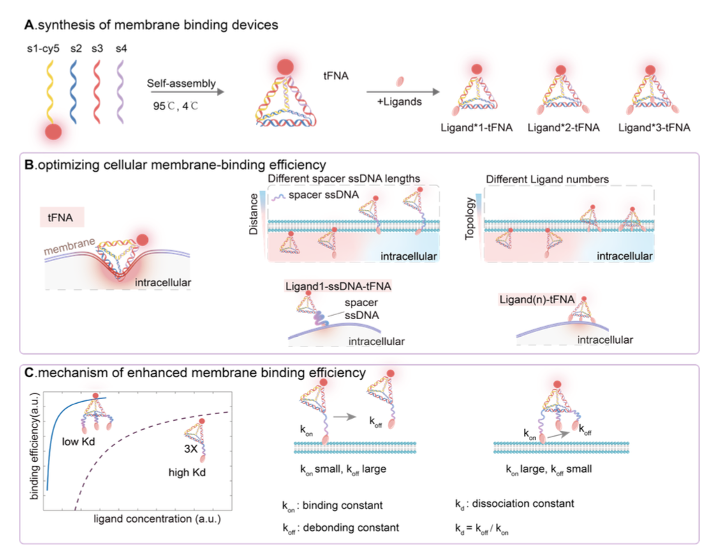
For the last decade, tFNA has been regarded as a nanoparticle capable of efficient activation of cellular endocytosis pathways, and various drug delivery strategies have been established upon that.
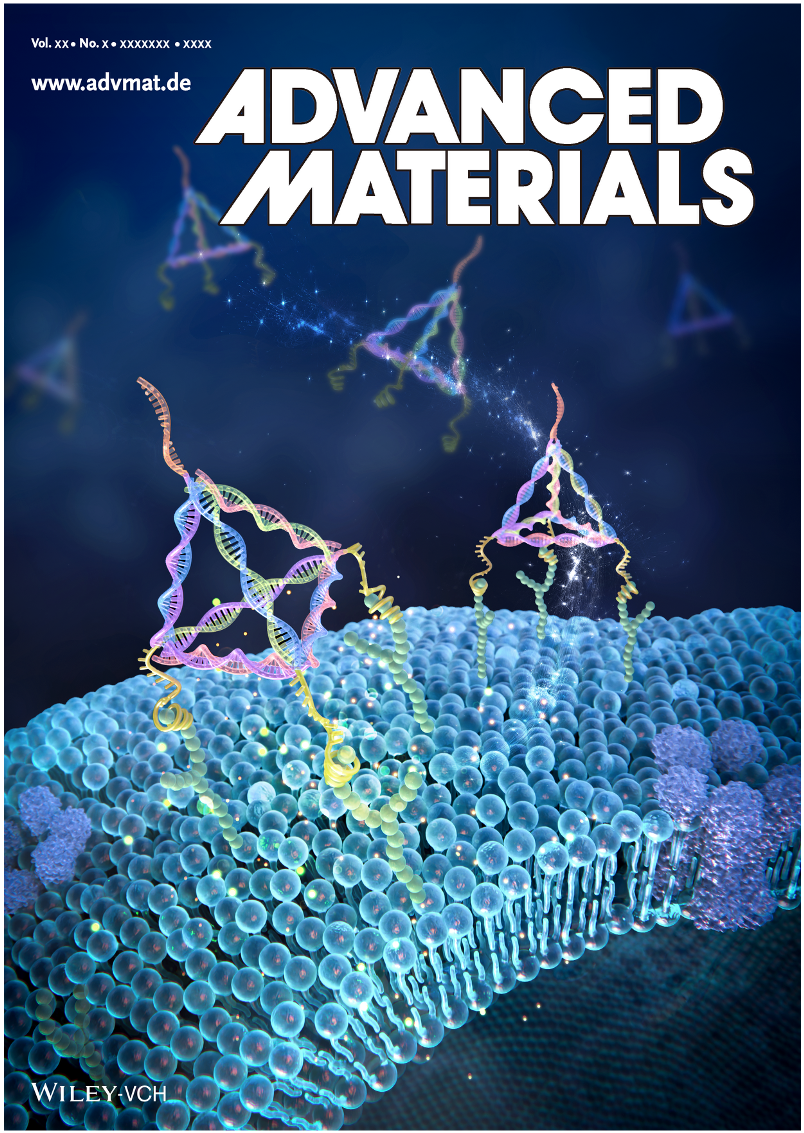
Our work, in a concordant understanding of other leading groups, indicates that the fate of FNA could be regulated with delicate design. FNA could be applied as a cellular membrane marker with remarkable biocompatibility and programmability.
This insight has driven us to join and contribute to the recent research focus on DNA nanotechnology. Briefly, How could FNA fabricate cellular surface coating? How would these FNA coatings interact with cells? How could these understandings be applied to address biomedical challenges?
Research Focus 2
It has been well acknowledged that the editability and rigidity of FNAs endow them wonderful tools to establish spatial relation frameworks in 2D and 3D scenarios. Various applications ranging from biosensors to immune regulators have been established upon that understanding.
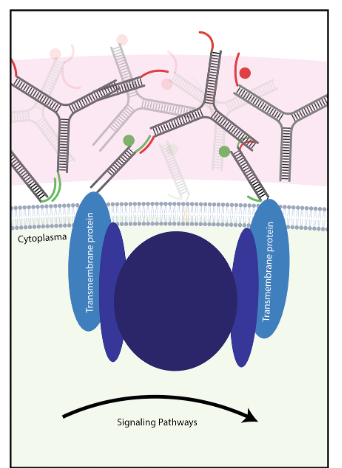
Our research focuses on the biomedical challenges. While molecular ligand-receptor binding and activation have traditionally been viewed as a single, on/off-type process, the dynamic signalling of the ligand-receptor complex normally requires not just binding, but stable engagement under specific spatial configurations. That is how FNAs could make a difference.
Numerous diseases are originated by the insufficient activation of molecular receptors, and numerous challenges in biomedical engineering could be addressed by proper and enhanced activations of certain receptors. The identification of ligand-receptor binding configuration and FNA-based receptor activation are prioritized.

Research Focus 3
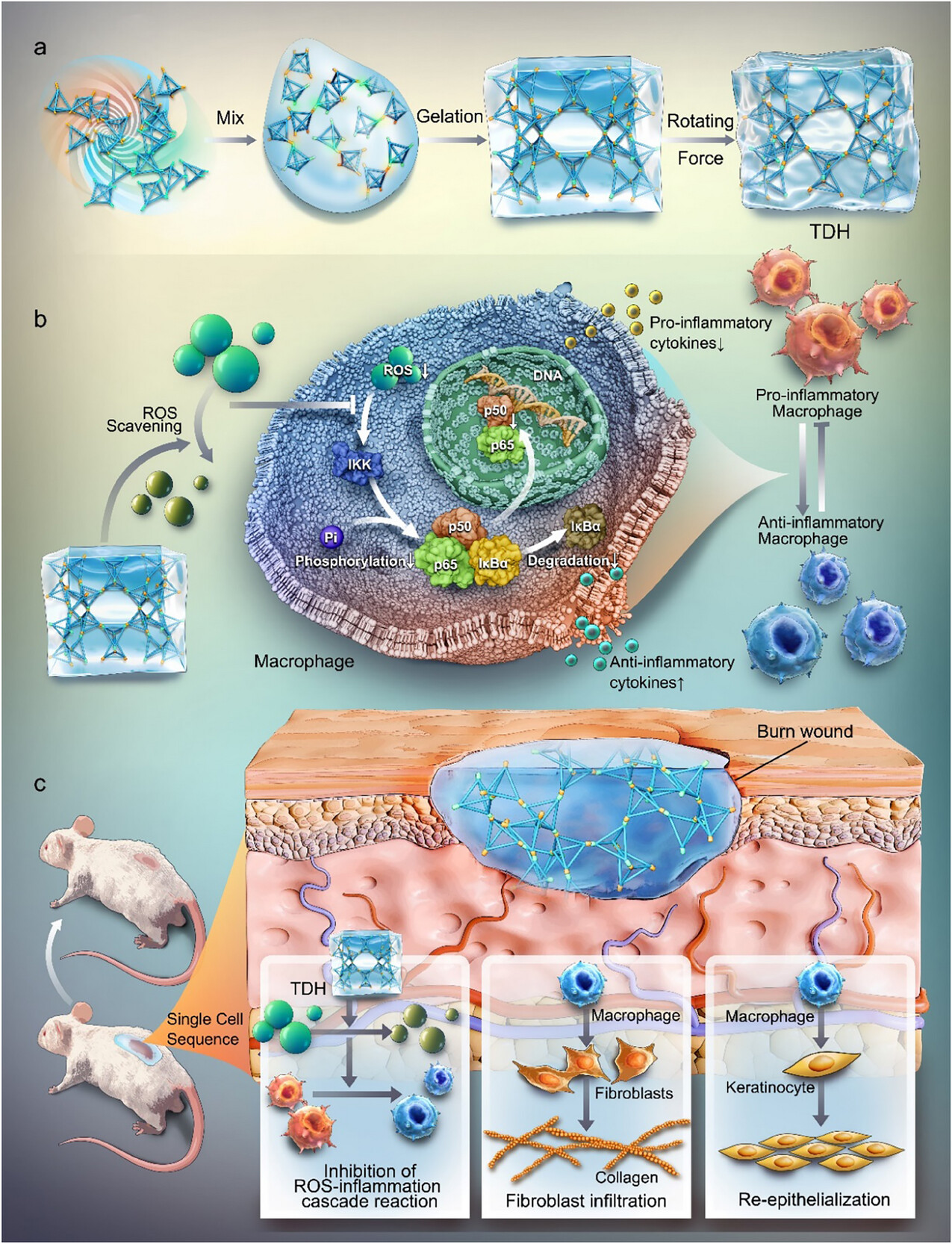
DNA, by its intrinsic nature, is capable of cross-linking via numerous strategies. If cost is not the priority, FNA could be fabricated in the form of hydrogel.
It is indeed an expensive project. Regardless, how tissue defects would react in the presence of FNA hydrogel has not been well documented. Nucleic acids are regarded as good inflammatory and immune regulators, facilitating regeneration. Hence the project is expensively promising.
We have established some understanding in the field of soft tissue repair. These insights could be helpful to address some clinical challenges bothering the surgeons for a long time.
Publication list
Papers in the recent 2 years.
Advanced Materials
Diamond‐Inspired DNA Hydrogel Based on Tetrahedral Framework Nucleic Acids for Burn Wound Healing
2025-08
Biomaterials
BBPs-functionalized tetrahedral framework nucleic acid hydrogel scaffold captures endogenous BMP-2 to promote bone regeneration
2025-08
ACS Nano
Framework Nucleic Acid Nanomaterials for Central Nervous System Therapies: Design for Barrier Penetration, Targeted Delivery, Cellular Uptake, and Endosomal Escape
2025-07
ACS Nano
Oral Administration of a Tetrahedral Framework DNA-Based Nanoshot Attenuates Liver Fibrosis via Targeting Galectin-3
2025-07
Advanced Functional Materials
Tetrahedral Framework Nucleic Acids as an Efficient Nasal‐to‐Brain Delivery Carrier via Neural Transport Pathways
2025-07
Journal of Controlled Release
Nanoparticles encapsulating antigenic peptides induce tolerogenic dendritic cells in situ for treating systemic lupus erythematosus
2025-05
Advanced Science
Enzyme‐Responsive Nanoparachute for Targeted miRNA Delivery: A Protective Strategy Against Acute Liver and Kidney Injury
2025-03
JACS Au
Current Understanding and Translational Prospects of Tetrahedral Framework Nucleic Acids
2025-02
Nature Protocols
A bioswitchable delivery system for microRNA therapeutics based on a tetrahedral DNA nanostructure
2025-02
Advanced Materials
Development of an Inhalable DNA Tetrahedron MicroRNA Sponge
2025-01
Chemical Engineering Journal
The construction of a peptide vaccine with multifunctional DNA tetrahedron exoskeleton
2024-12
Advanced Materials
Framework Nucleic Acid‐Based Selective Cell Catcher for Endogenous Stem Cell Recruitment
2024-12
Small
Nanoparticles in Subunit Vaccines: Immunological Foundations, Categories, and Applications
2024-11
Signal Transduction and Targeted Therapy
DNA framework signal amplification platform-based high-throughput systemic immune monitoring
2024-2
Advanced Science
A Novel Bioswitchable miRNA Mimic Delivery System: Therapeutic Strategies Upgraded from Tetrahedral Framework Nucleic Acid System for Fibrotic Disease Treatment and Pyroptosis Pathway Inhibition
2024-1